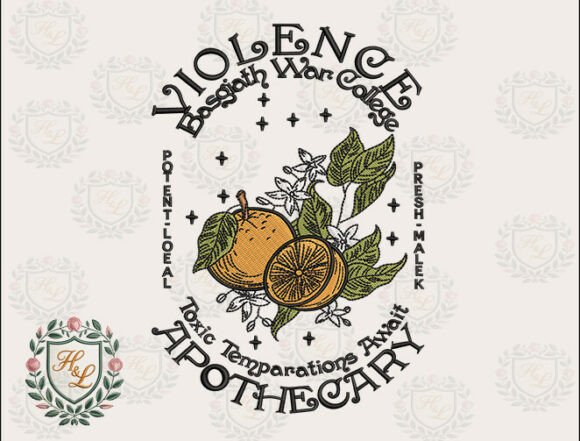
Reviewing Violence Apothecary Embroidery Files
As an embroidery designer who has spent years digitizing logos and testing files for commercial production, I approach every new machine embroidery design with a critical eye. It is not just about whether the image looks pretty on a screen; it is about how that digital asset translates into thread, fabric, and ultimately, brand value. Recently, I evaluated the Violence Apothecary Embroidery Files to determine their viability for small business merchandise and branded patch use. This review focuses on practical application, stitch quality implications, and strategic branding opportunities for apparel decorators and handmade brands.
First Impressions and Visual Personality
The title Violence Apothecary immediately suggests a bold, edgy aesthetic, likely blending gothic or industrial elements with vintage apothecary motifs. However, the product description categorizes this under Fairy Tales, which creates an intriguing juxtaposition. This contrast implies a design that is not merely aggressive but perhaps whimsically dark or narratively rich. For a boutique owner or Etsy seller, this visual personality is a powerful tool. It feels premium and decorative, moving away from generic clip-art styles toward something that tells a story.
When reviewing the provided details, the file is described as a high-quality digital appliqué design. Appliqué is a smart choice for business use because it reduces stitch count while maximizing visual impact. This means the Violence Apothecary Embroidery Files are likely suitable for larger areas without becoming stiff or heavy, a common issue with dense satin stitches. The potential for this design to feel both handmade and professional is high, provided the digitizing respects the balance between fabric coverage and thread texture.
Strategic Applications for Small Business Merch
For small business owners, the versatility of an embroidery file determines its return on investment. I envision the Violence Apothecary Embroidery Files working exceptionally well in several key areas of custom apparel and branded goods.
- Embroidered Patches: This is perhaps the strongest use case. An appliqué design translates beautifully to a patch format. You can produce these in batches and sew them onto various items later, offering customers customizable options. A patch featuring this design could serve as a distinctive badge for a creative studio or a local café with an alternative vibe.
- Tote Bag Design: Tote bags require designs that are durable and visually striking from a distance. The bold nature of an apothecary theme stands out on canvas or cotton blends. Using this as a central graphic element adds perceived value to a simple bag, turning it into a statement piece.
- Apron Embroidery: For bakeries, florists, or craft breweries, staff uniforms are walking billboards. Placing this design on the chest pocket or lower hem of an apron creates a cohesive brand identity. It signals professionalism and attention to detail, enhancing customer trust.
- Cap Embroidery: While caps have limited space, a simplified version of this design could work on the front panel. However, caution is needed regarding curvature and stitch density, which I will address later.
Beyond apparel, consider using this design for festive decorations or pillows, as suggested in the product description. For a handmade product line, these items can serve as high-margin add-ons during holiday seasons, leveraging the unique aesthetic of the Violence Apothecary Embroidery Files to drive buyer engagement.
Navigating Technical Challenges and Fabric Constraints
Even the most beautiful digital embroidery file can fail if applied incorrectly. As a designer, I must highlight where this specific design requires careful handling. Since the description mentions it is perfect for shirts, tote bags, and pillows, we can assume it is versatile, but technical nuances remain.
Stitch Density and Texture: Appliqué designs rely on fabric layers rather than just thread. If the Violence Apothecary Embroidery Files include intricate outlines or small text, these areas may be prone to puckering if the stabilizer is insufficient. Always test on the actual fabric texture you plan to use. Dark uniforms, for instance, may require a different thread color strategy to ensure visibility without compromising the design’s integrity.
Size Limitations: Do not assume this design scales infinitely. Reducing an appliqué design too much can make the fabric edges difficult to trim and the tack-down stitches messy. If you intend to use this for small patch sizes or tiny lettering, verify the minimum viable hoop size. Check if the design retains its clarity when scaled down to a 4x4 inch hoop versus a 5x7 inch hoop.
Washability: Items like tote bags and aprons undergo frequent washing. Ensure that the appliqué fabric is pre-shrunk and that the securing stitches are dense enough to prevent fraying over time. This affects the longevity of your finished product and, by extension, your brand’s reputation for quality.
Enhancing Brand Identity and Customer Trust
In the world of commercial embroidery, consistency is key. Using a distinct design like Violence Apothecary Embroidery Files helps establish a recognizable visual language. When customers see this motif on a shirt, then again on a tote bag, and finally on a packaging accent, it reinforces brand recognition. This visual consistency builds trust, signaling that your business is established and thoughtful.
Moreover, high-quality embroidery elevates the perceived value of any item. A plain t-shirt becomes a premium garment; a standard canvas bag becomes a designer accessory. By integrating this design into your small business merch, you are not just selling a product; you are selling an experience and an aesthetic. This is crucial for Etsy sellers and craft businesses competing in saturated markets. The unique blend of fairy tale elements with an apothecary theme offers a niche appeal that can attract a dedicated customer base.
Practical Designer Notes for Production
Before running a full production batch, follow these essential steps to ensure success with the Violence Apothecary Embroidery Files:
- Test in Black and White: Print or stitch the design in monochrome first. This reveals the structural integrity of the digitizing without the distraction of color. It helps you identify any spacing issues or weak points in the outline.
- Check Thread Color Contrast: Choose thread colors that complement the appliqué fabric. High contrast draws attention, while low contrast offers a subtle, sophisticated look. Create a printable mockup to visualize this before stitching.
- Confirm Commercial Licensing: The product description does not explicitly state license terms. Before using this for commercial embroidery projects, contact the seller to confirm you have the right to sell items made with this file. This is non-negotiable for professional practice.
- Select the Right Stabilizer: For appliqué, a cut-away stabilizer is often best for garments that will be washed frequently, while tear-away may suffice for decorative pillows. Match the stabilizer to the fabric weight.
- Compare with Other Design Assets: Place this design alongside your existing logo or branding elements. Ensure it fits within your overall visual strategy and does not clash with other graphics used on your custom apparel.
In conclusion, the Violence Apothecary Embroidery Files present a compelling opportunity for brands looking to inject personality into their merchandise. With careful attention to technical details and strategic placement, this design can become a cornerstone of your brand identity. Whether used for an embroidered patch, a staff uniform, or a signature tote bag, it offers the blend of creativity and professionalism that modern consumers crave. Always prioritize quality control and licensing compliance to protect your business and delight your customers.